The coded textile Project
The Coded Textile Project used computation to explore materials and meaning in textile embellishment. In the context of the project, “coded” meant designing a system of signs, organized by rules, procedures and relationships, using either analog or digital tools. Machine thinking generated new possibilities for print, embroidery and woven design. The project also took the approach that textile embellishment is itself a “code”- storing information, abstracting meaning, formulating new symbols or communication systems. The relationship of embellishment to location was central to this investigation of “embellishment semiotics”. Our digital sketches and textile outputs explored how technology impacts the interaction of surface design and environment.
Researcher: Anette Millington
Research Assistant and Creative Coder: Anna Garbier
The lineage series
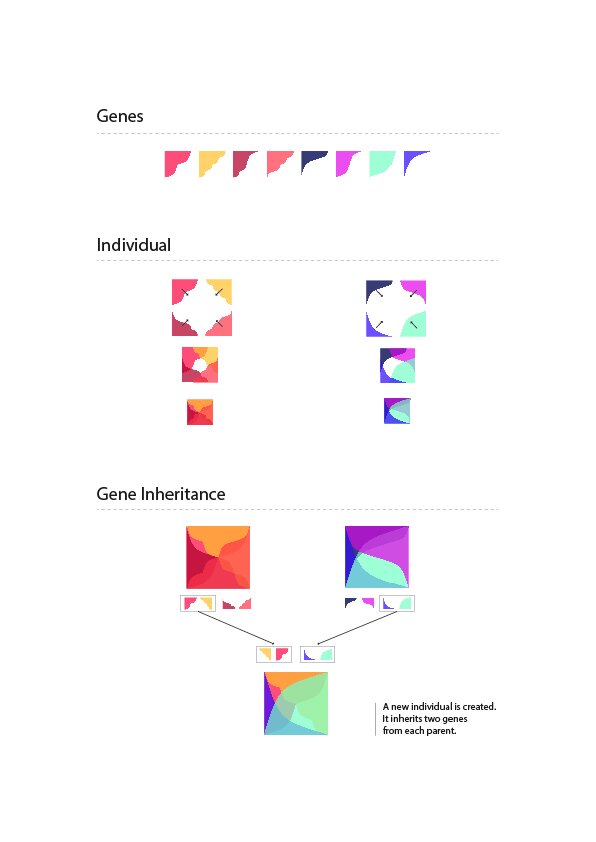
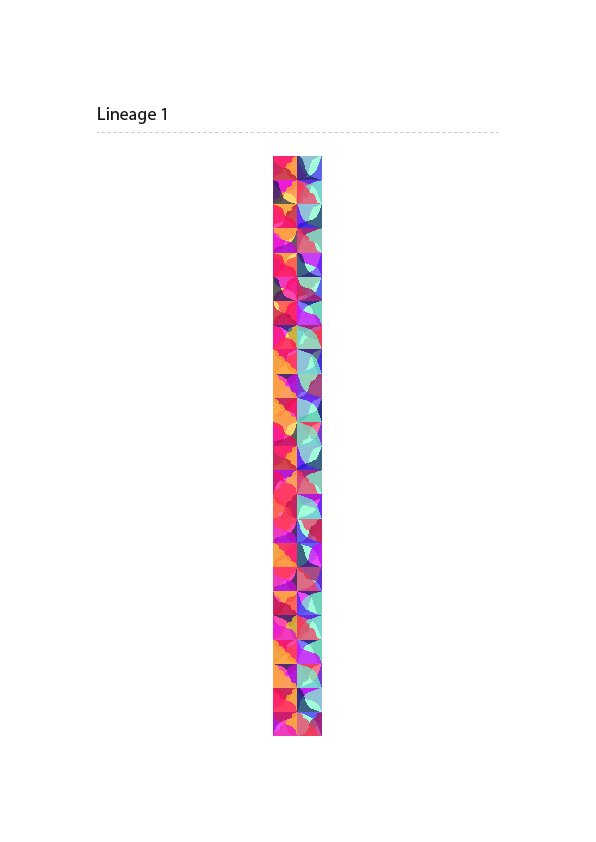
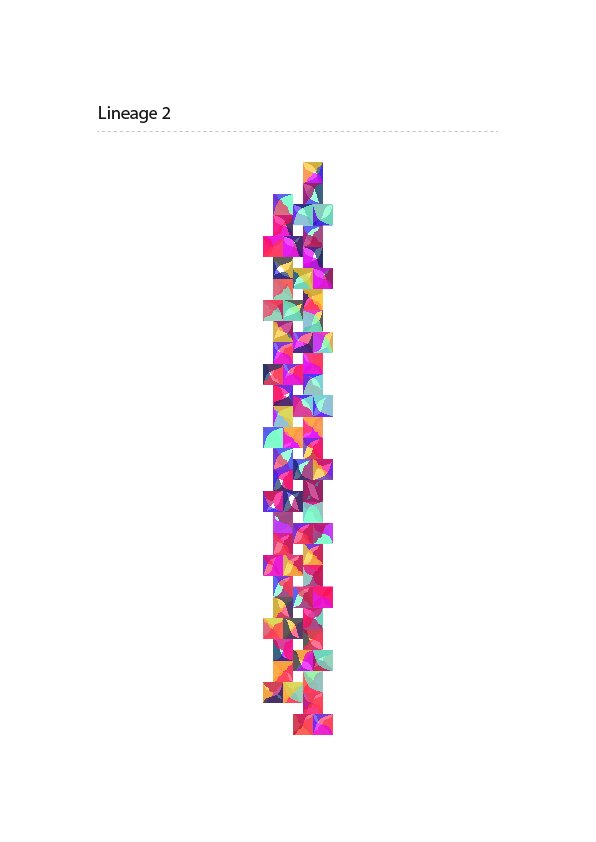
The Lineage Series is an abstraction of a family tree and uses a coded process, similar to dna inheritance, to evolve. The coding for this project is based on evolutionary networks of natural selection, genetics, and syntax tree diagrams.
LOGIC AND GENERATIVE WORKS
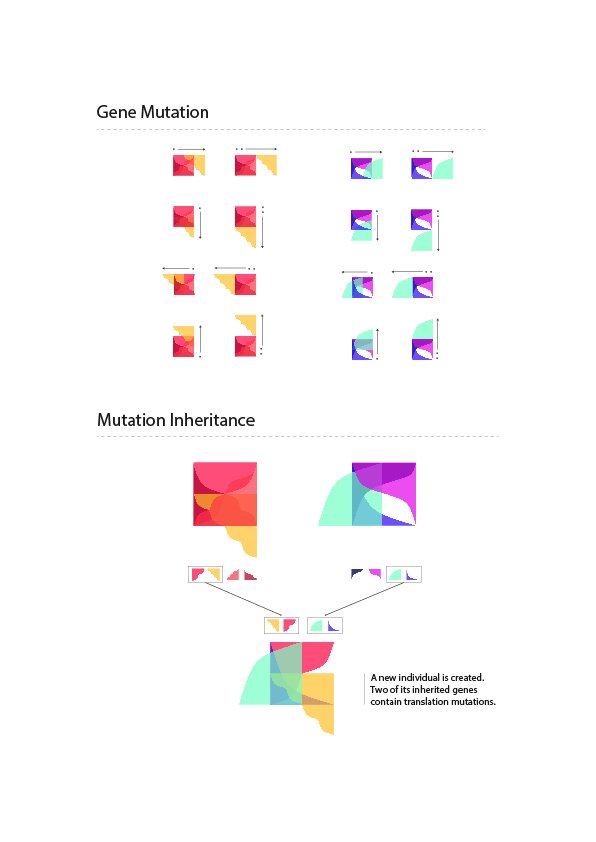
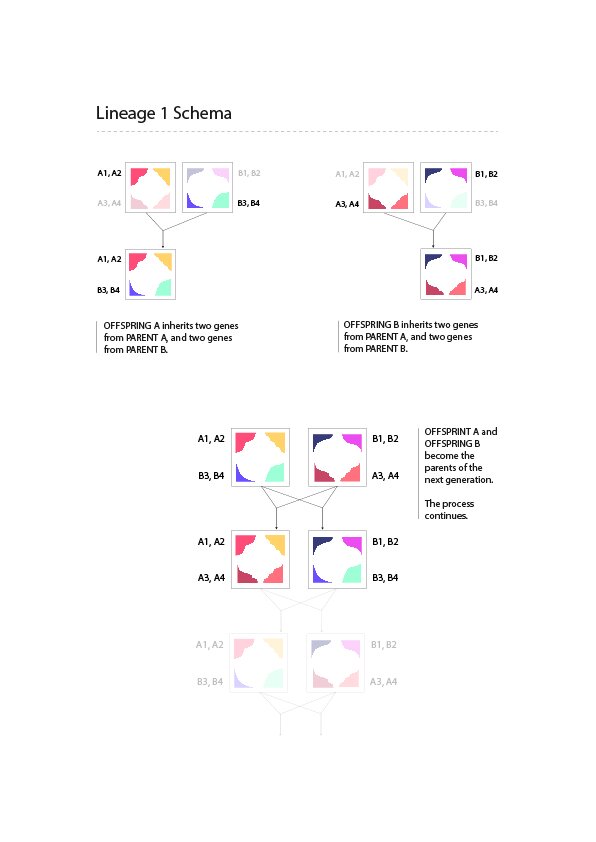
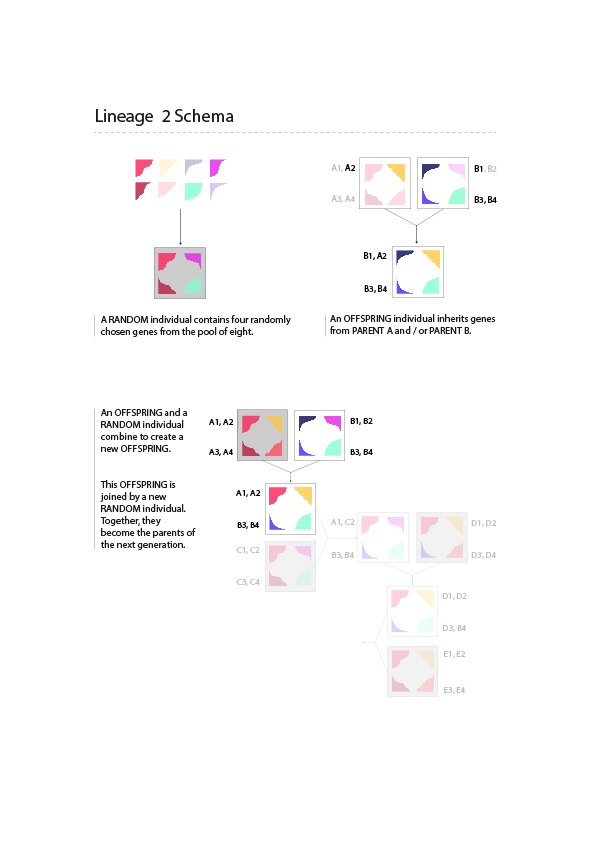
The unit system for the lineage is based on 54 shapes that reference architectural ornamentation. These shapes serve as the “dna” or the “letters” that are combined according to symmetry rules. Four overlapping units make up the first generation and these combinations reproduce according to numeric probability to generate new combinations. Variation is introduced to the system to displace the positioning of the combinations. Schema 1 and 2 present different rule possibilities for growing the pattern over time.
HAND QUILT SAMPLES
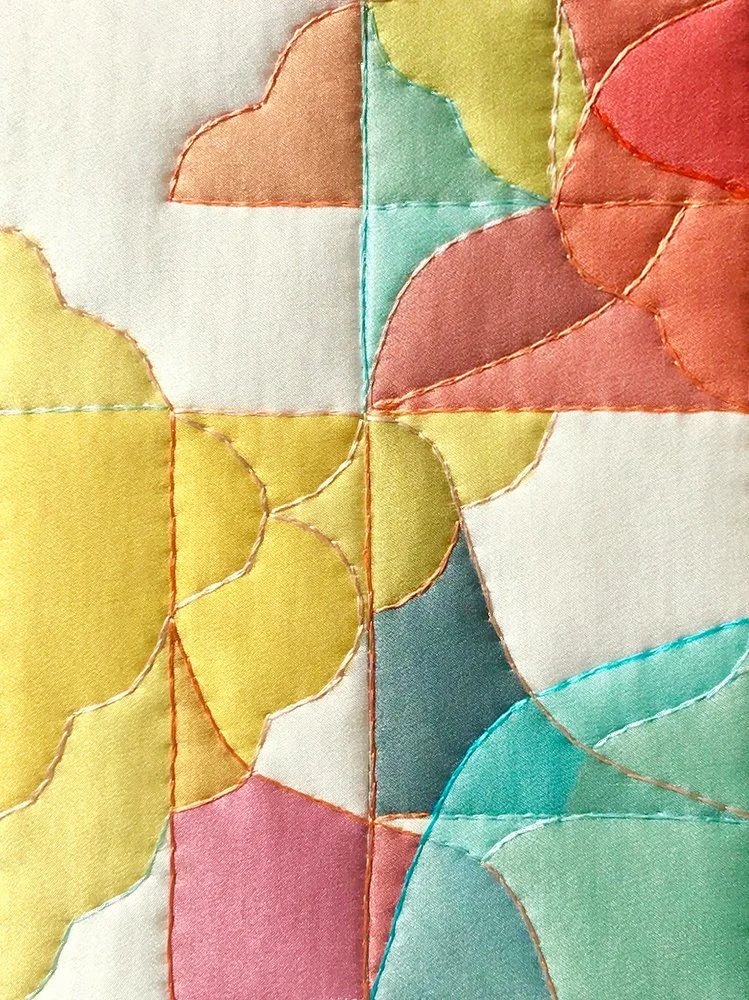
In addition to the generative works, the material manifestation of the piece is explored in hand embroidered quilt samples. For this work, one generated generation of the lineage series is captured and digitally printed. The final step is the introduction of hand stitching, along all the shape edges.