Response Patterns Materials-Based Research
Response Patterns was undertaken with the support of the Center for Craft's Materials-Based Research Grant, 2019, to invent environmentally responsive embellishment methods for textile. The team leveraged interdisciplinary experience—Yuchen Zhang’s knowledge in material science and interactive technology, Travis Fitch’s methodical study of geometry and digital fabrication, and Anette Millington’s expertise in textile art and embellishment. Processes included silk screening with photochromic pigment, and 3D printing. We see this use of new materials and technology as a natural progression in textile craft - which has historically imbued place into both it’s materiality and imagination.
Researchers: Anette Millington, Travis Fitch, Yuchen Zhang
Research Assistants: Erin McQuarrie, Liz Sandler
Modular Textile System
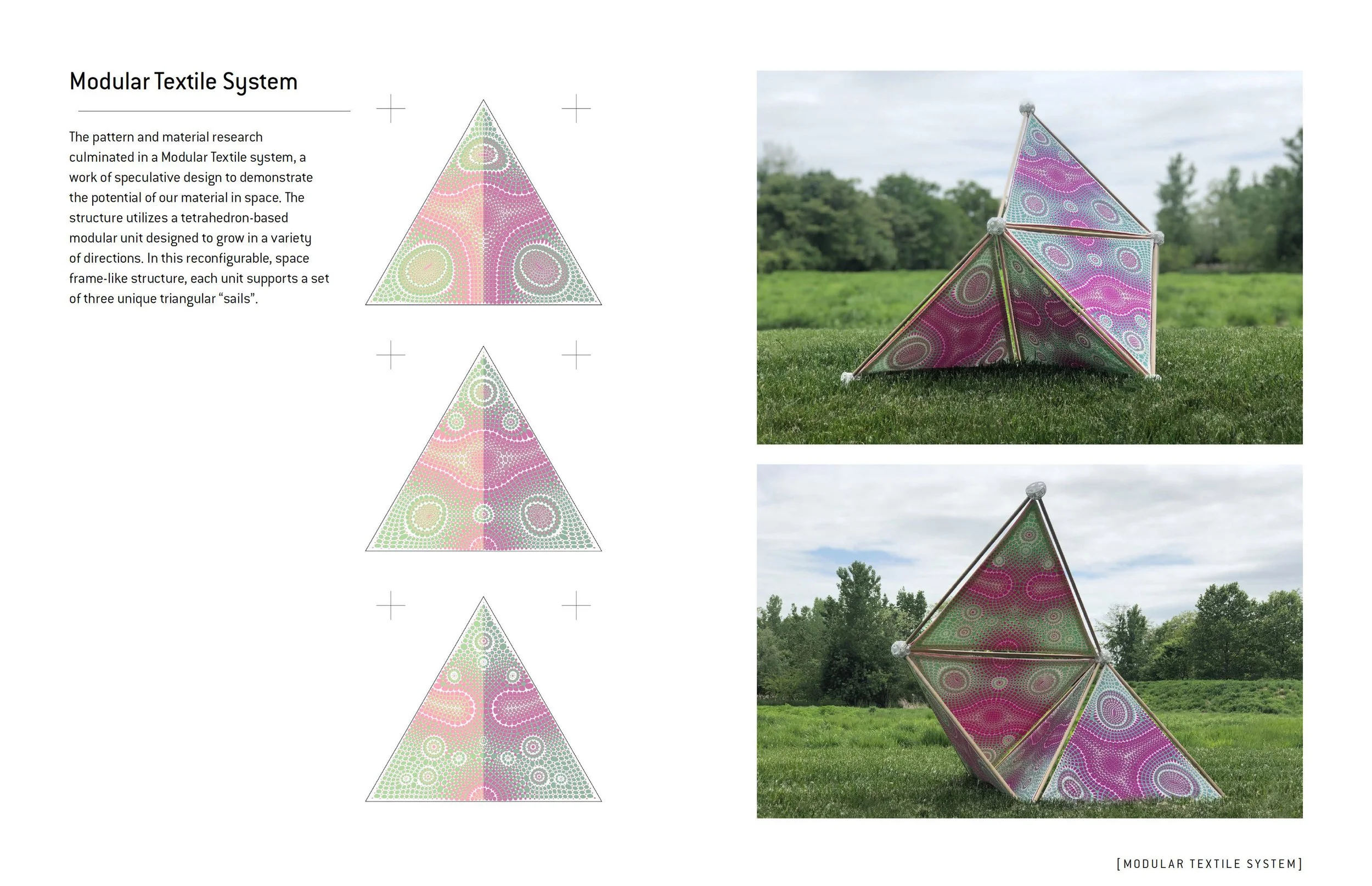
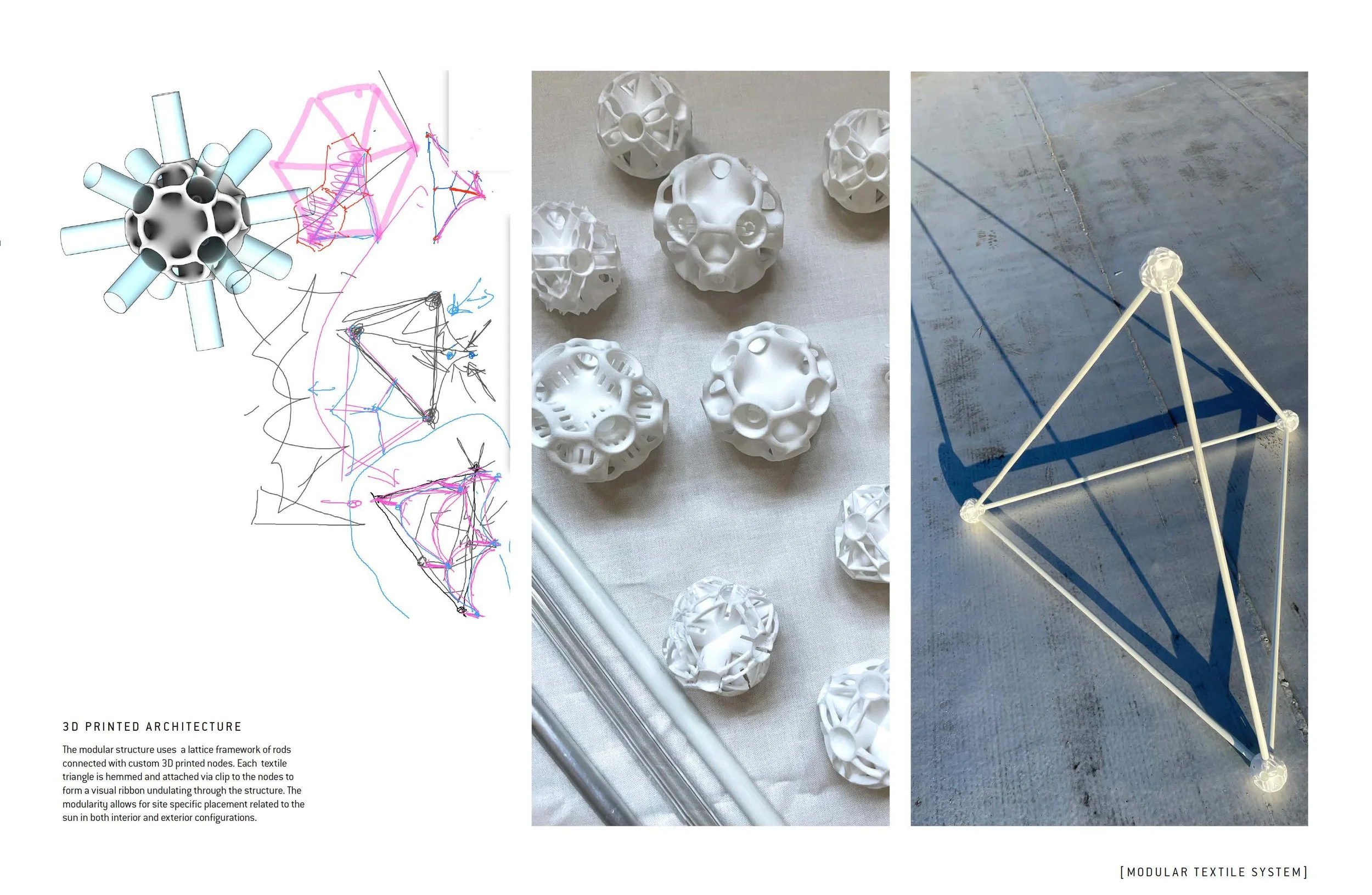
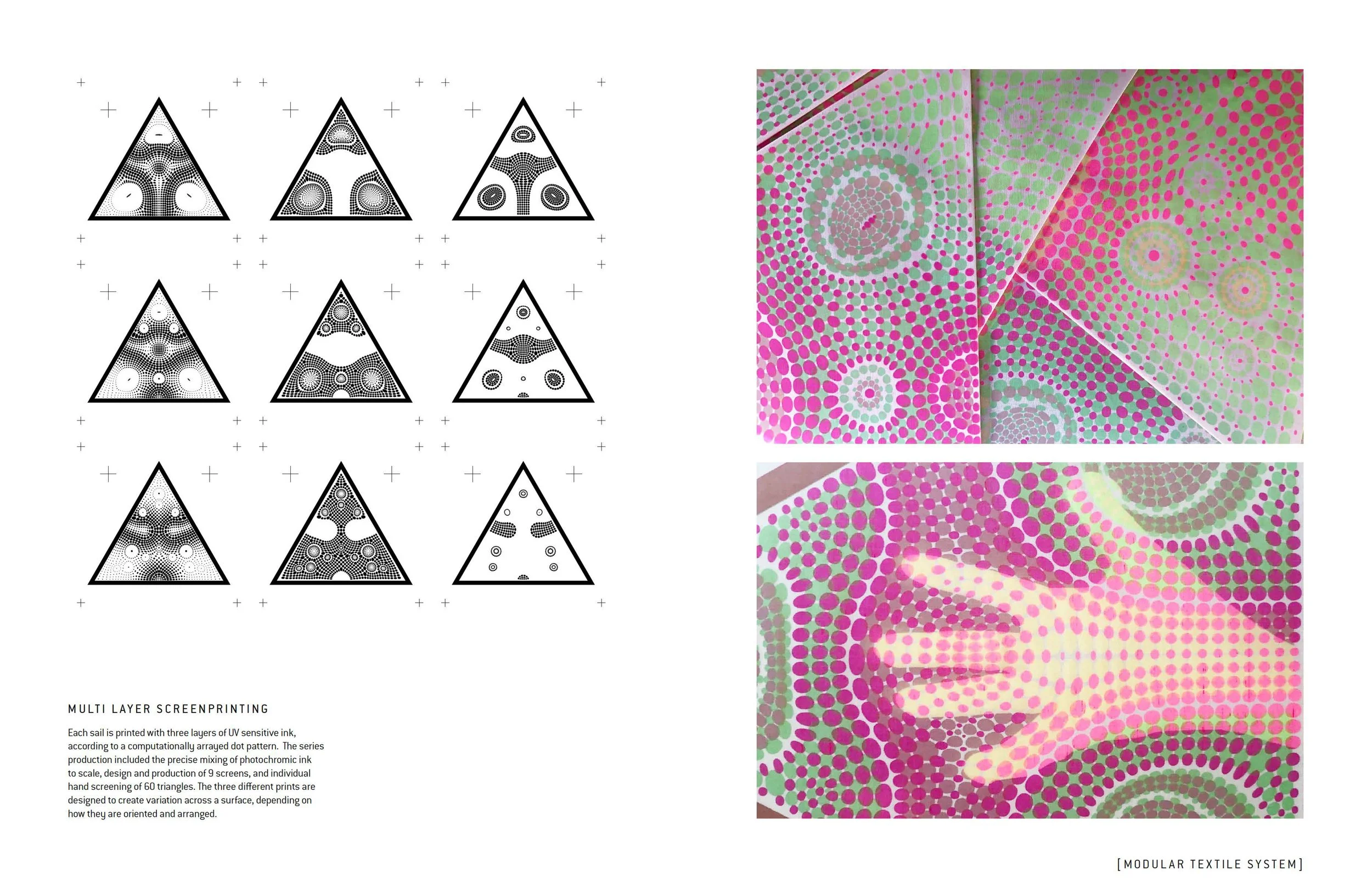
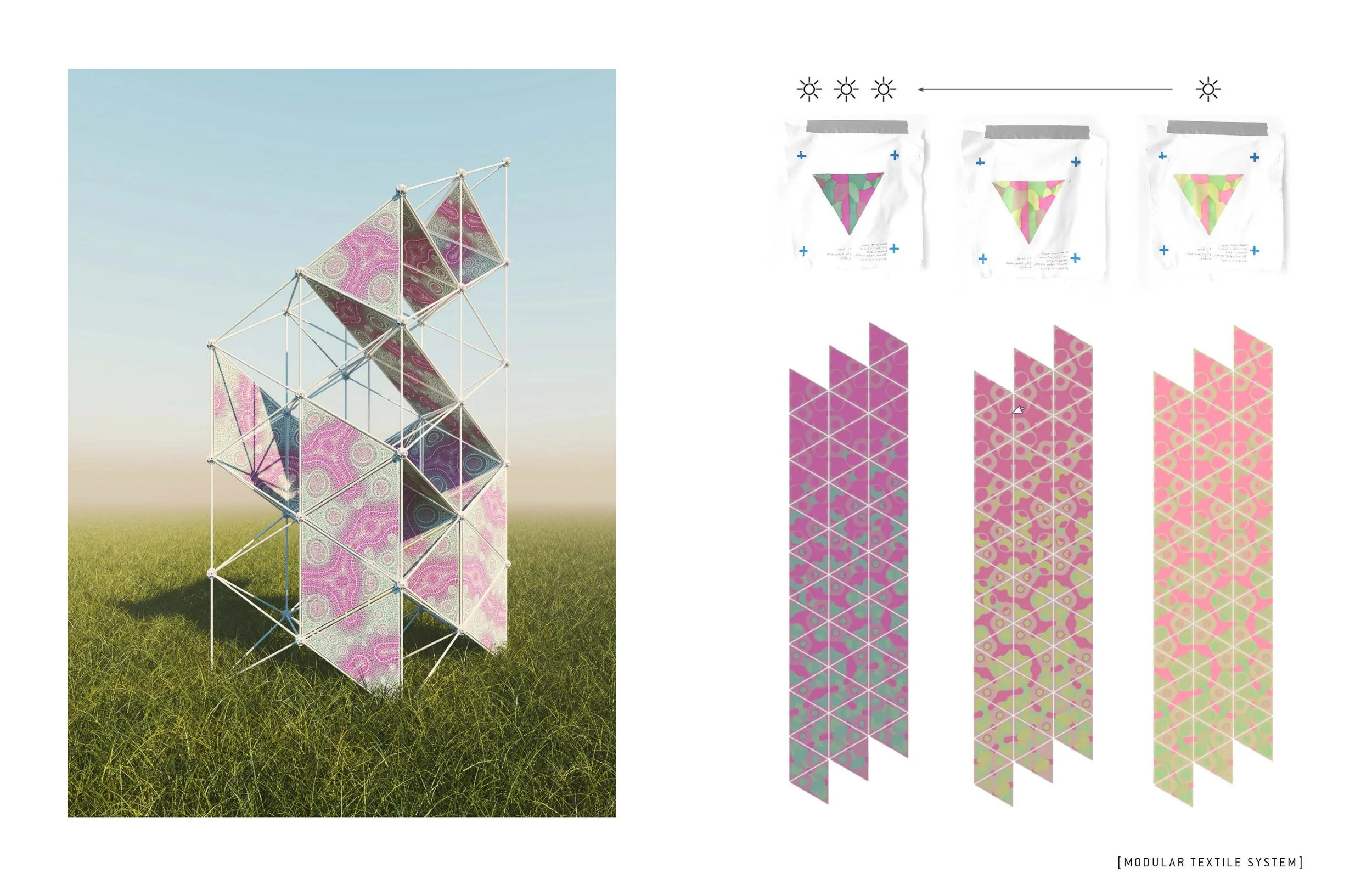
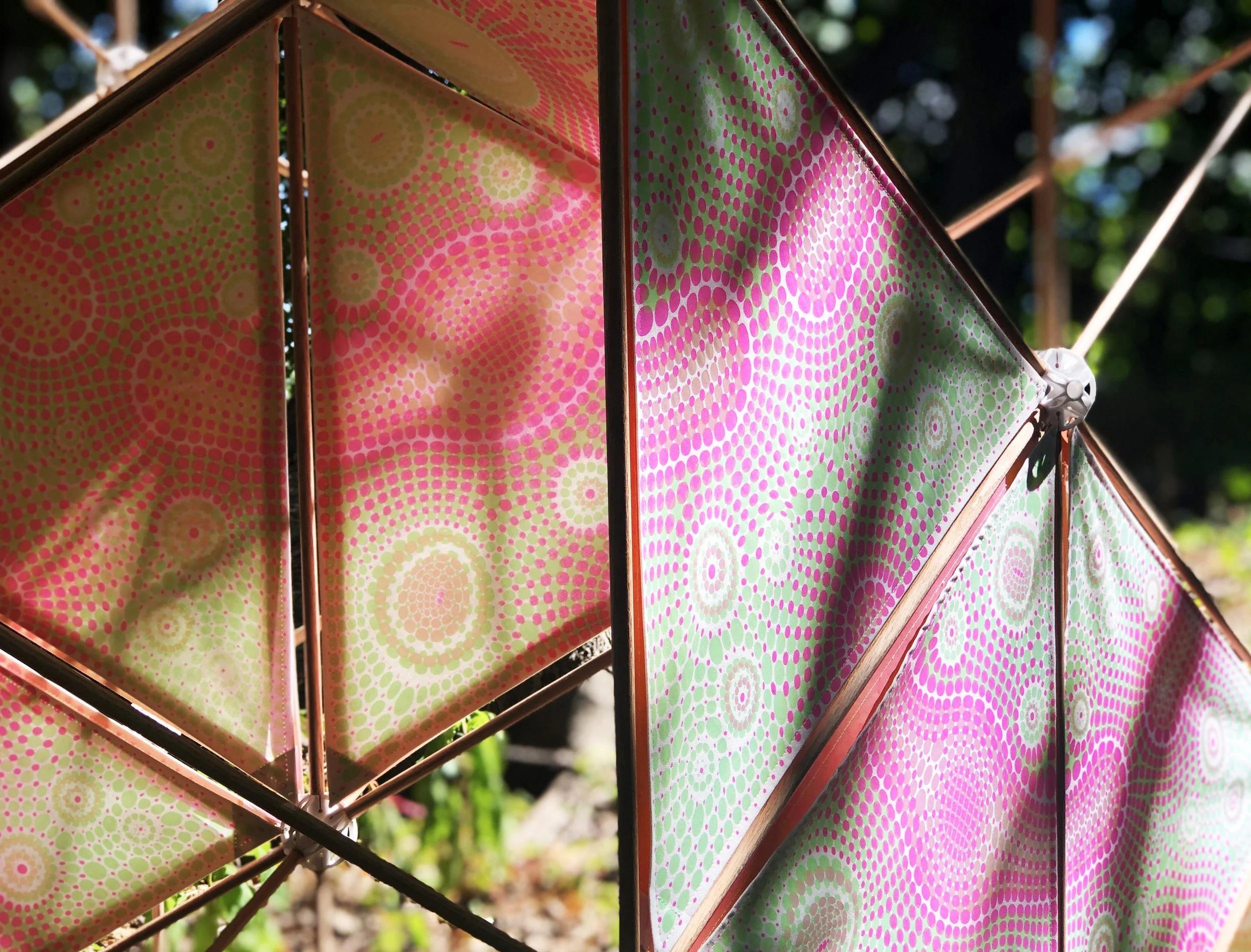
The pattern and material research culminated in a Modular Textile system, a work of speculative design to demonstrate the potential of our material in space. The structure utilizes a tetrahedron-based modular unit designed to grow in a variety of directions. In this reconfigurable, space frame-like structure, each unit supports a set of three unique triangular “sails”. Our modular textile system included a lattice framework of rods connected with custom 3D printed nodes. Each textile triangle was hemmed and attached via clip to the nodes to form a visual ribbon undulating through the structure. Each sail was printed with three layers of UV sensitive ink, according to a computationally arrayed dot pattern. The series production included the precise mixing of photochromic ink to scale, design and production of 9 screens, and individual hand screening of 60 triangles. The three different aperiodic prints were designed to create variation across a surface, depending on how they are oriented and arranged.
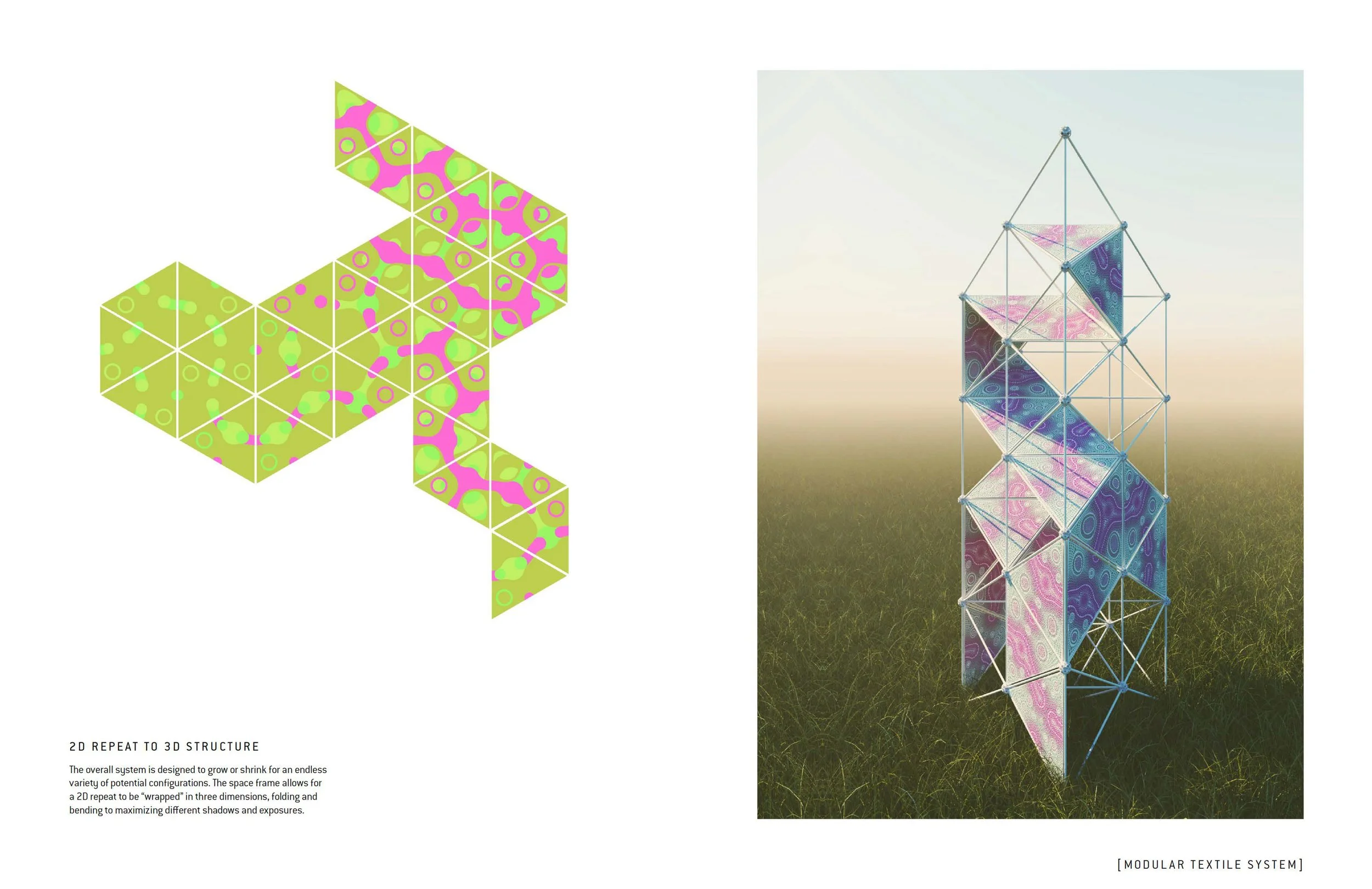
2D REPEAT TO 3D STRUCTURE
The overall system is designed to grow or shrink for an endless variety of potential configurations, for site specific placement related to the sun in both interior and exterior locations. The space frame allows for a 2D repeat to be “wrapped” in three dimensions, folding and bending to maximizing different shadows and exposures.

Research made possible by the Center for Craft's 2019 Materials-Based Research Grant