Response Patterns Materials-Based Research
Response Patterns was undertaken with the support of the Center for Craft's Materials-Based Research Grant, 2019, to invent environmentally responsive embellishment methods for textile. The team leveraged interdisciplinary experience—Yuchen Zhang’s knowledge in material science and interactive technology, Travis Fitch’s methodical study of geometry and digital fabrication, and Anette Millington’s expertise in textile art and embellishment. Processes included silk screening with photochromic pigment, and 3D printing. We see this use of new materials and technology as a natural progression in textile craft - which has historically imbued place into both it’s materiality and imagination.
Researchers: Anette Millington, Travis Fitch, Yuchen Zhang
Research Assistants: Erin McQuarrie, Liz Sandler
design Graphics
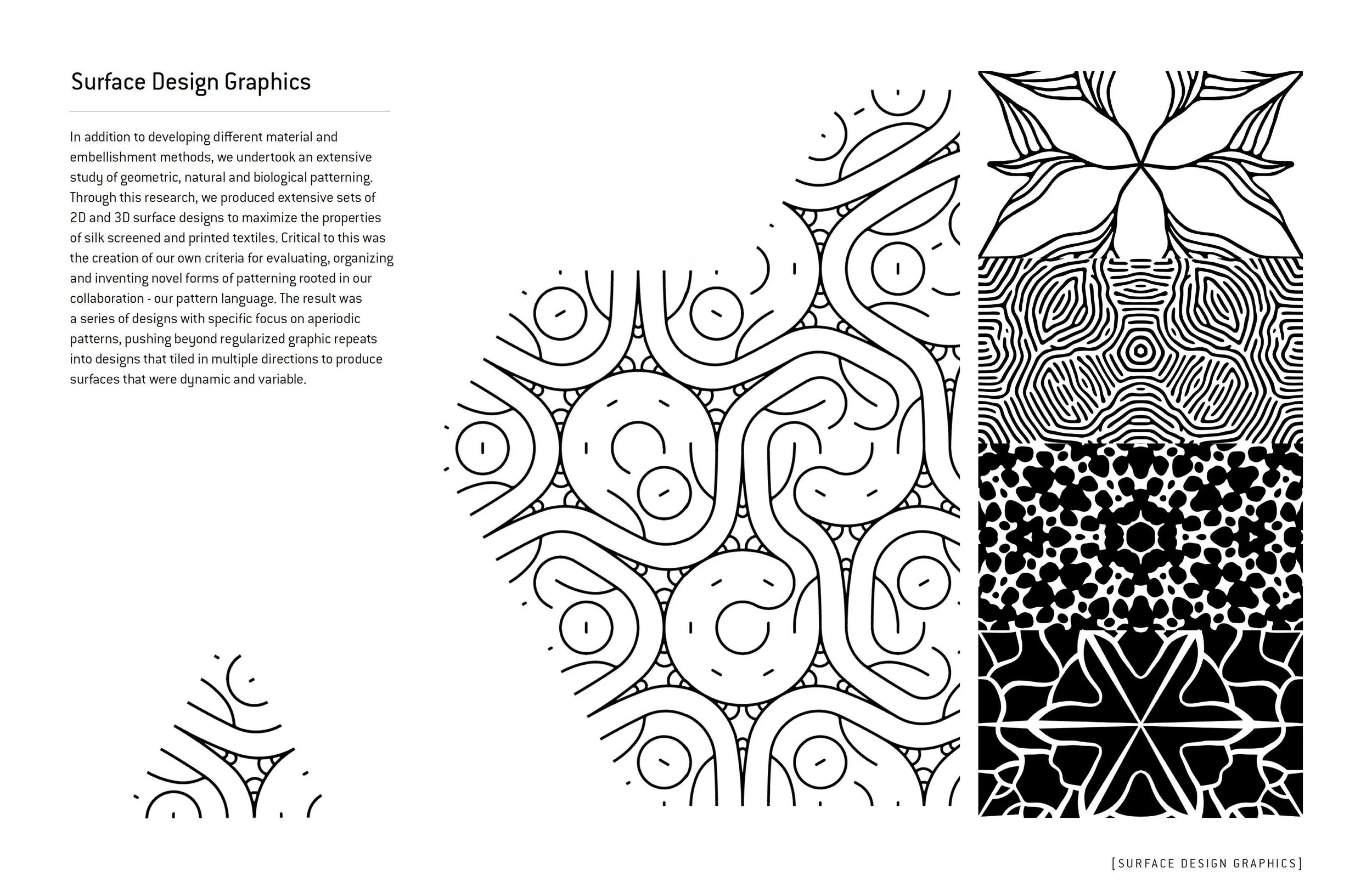
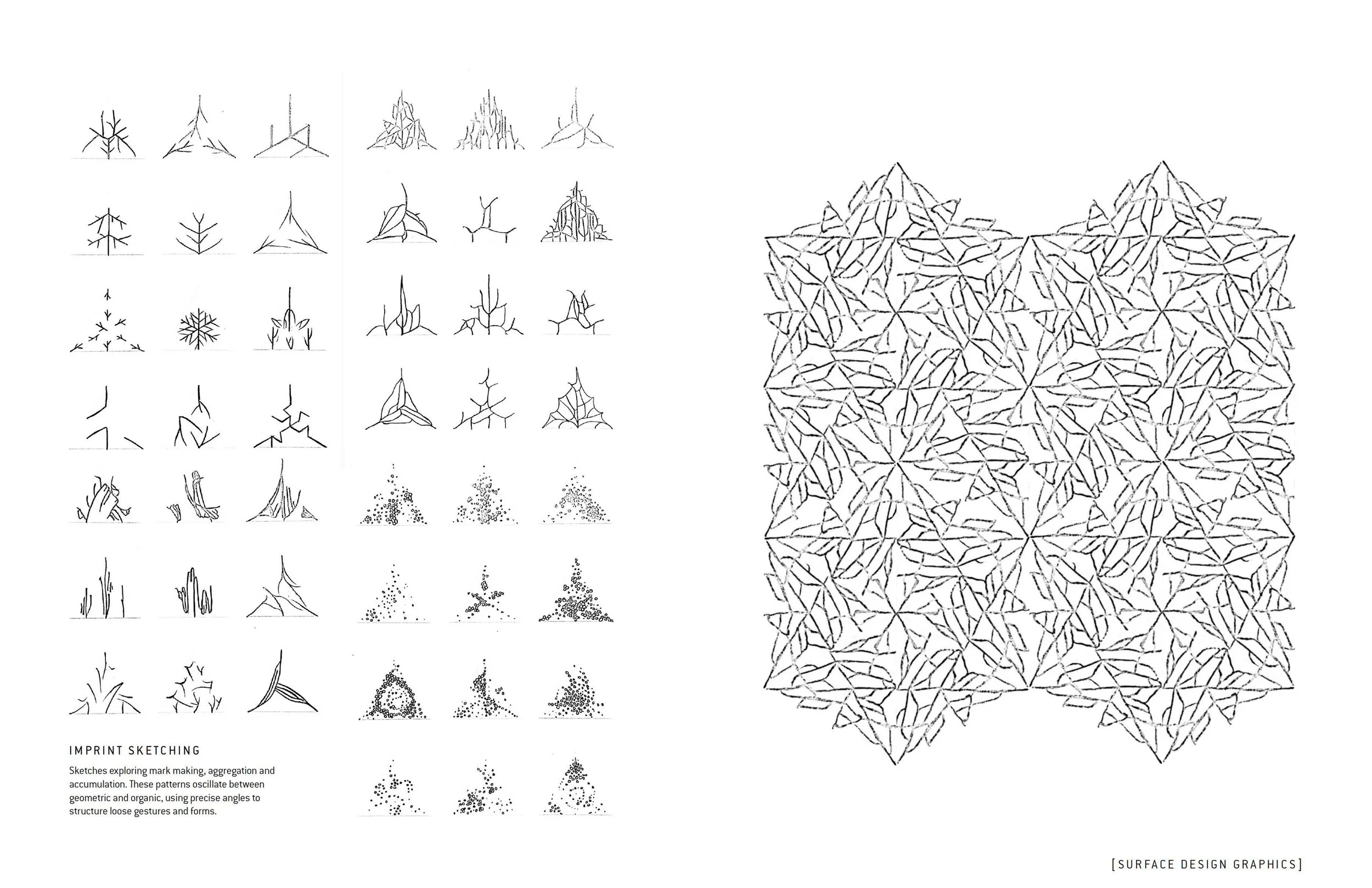
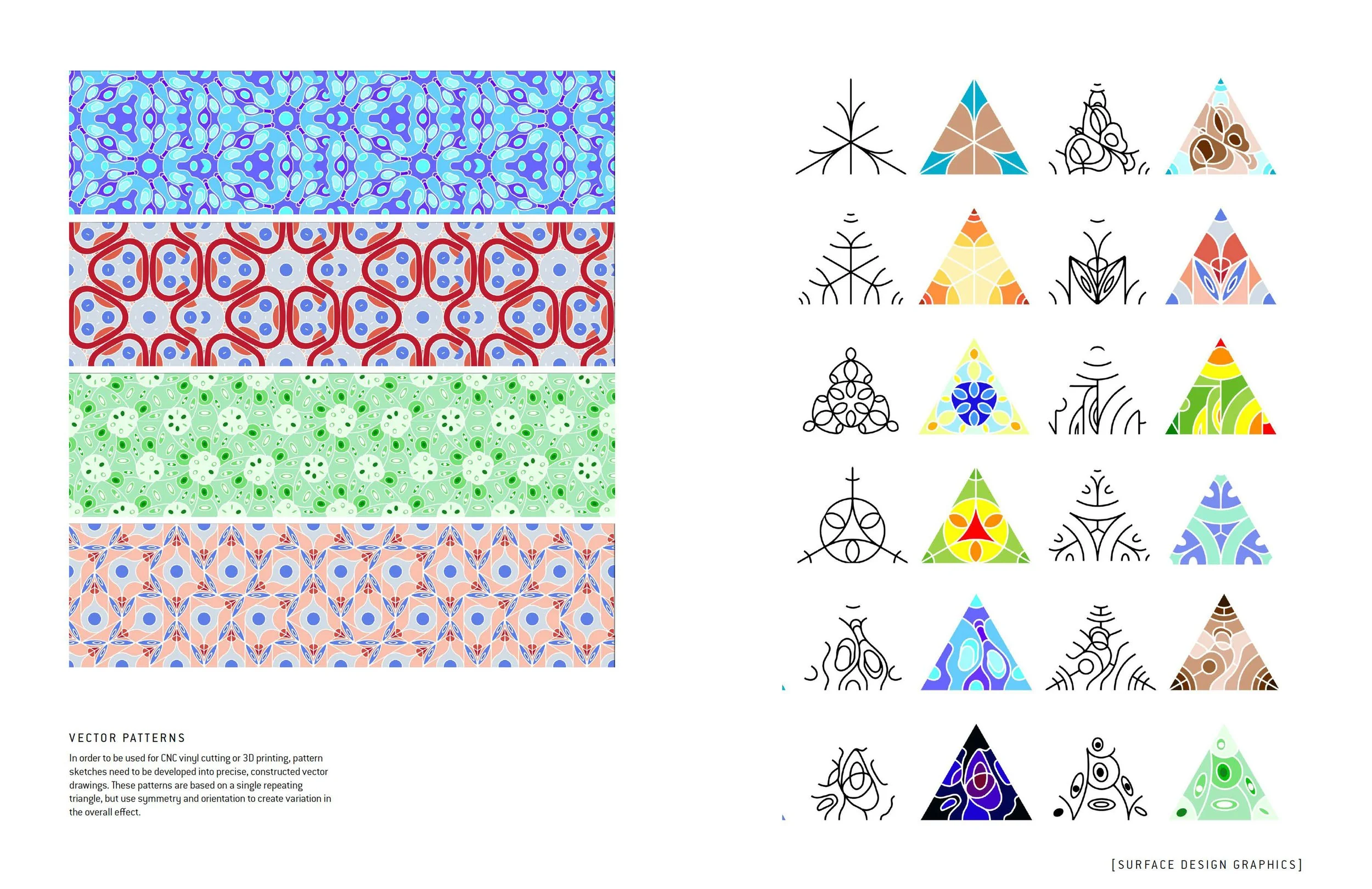
In addition to developing different material and embellishment methods, we undertook an extensive study of geometric, natural and biological patterning. Through this research, we produced extensive sets of 2D and 3D surface designs to maximize the properties of silk screened and printed textiles. Critical to this was the creation of our own criteria for evaluating, organizing and inventing novel forms of patterning rooted in our collaboration - our pattern language. The result was a series of designs with specific focus on aperiodic patterns, pushing beyond regularized graphic repeats into designs that tiled in multiple directions to produce surfaces that were dynamic and variable.
UV Silkscreen Prototyping
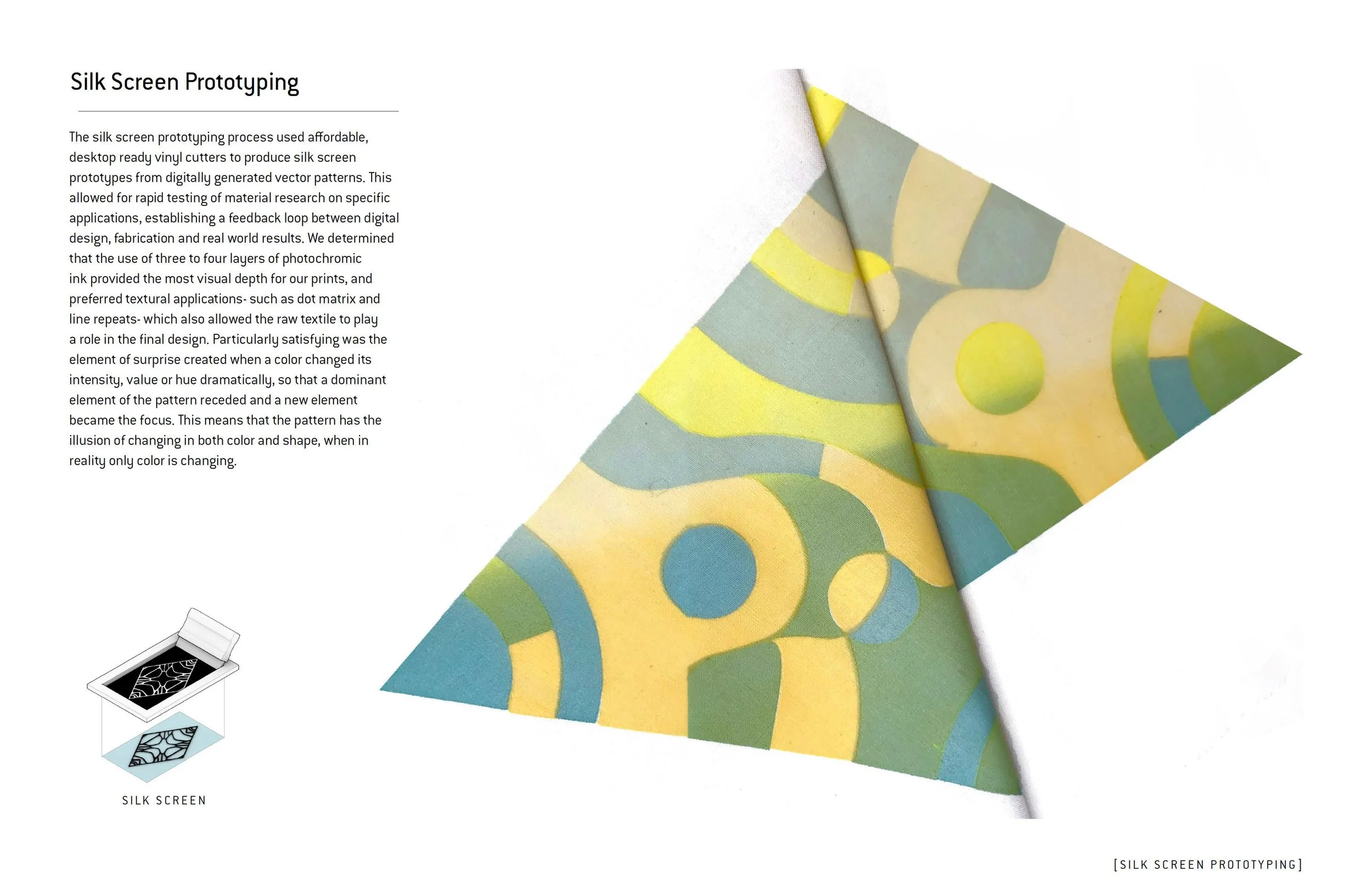
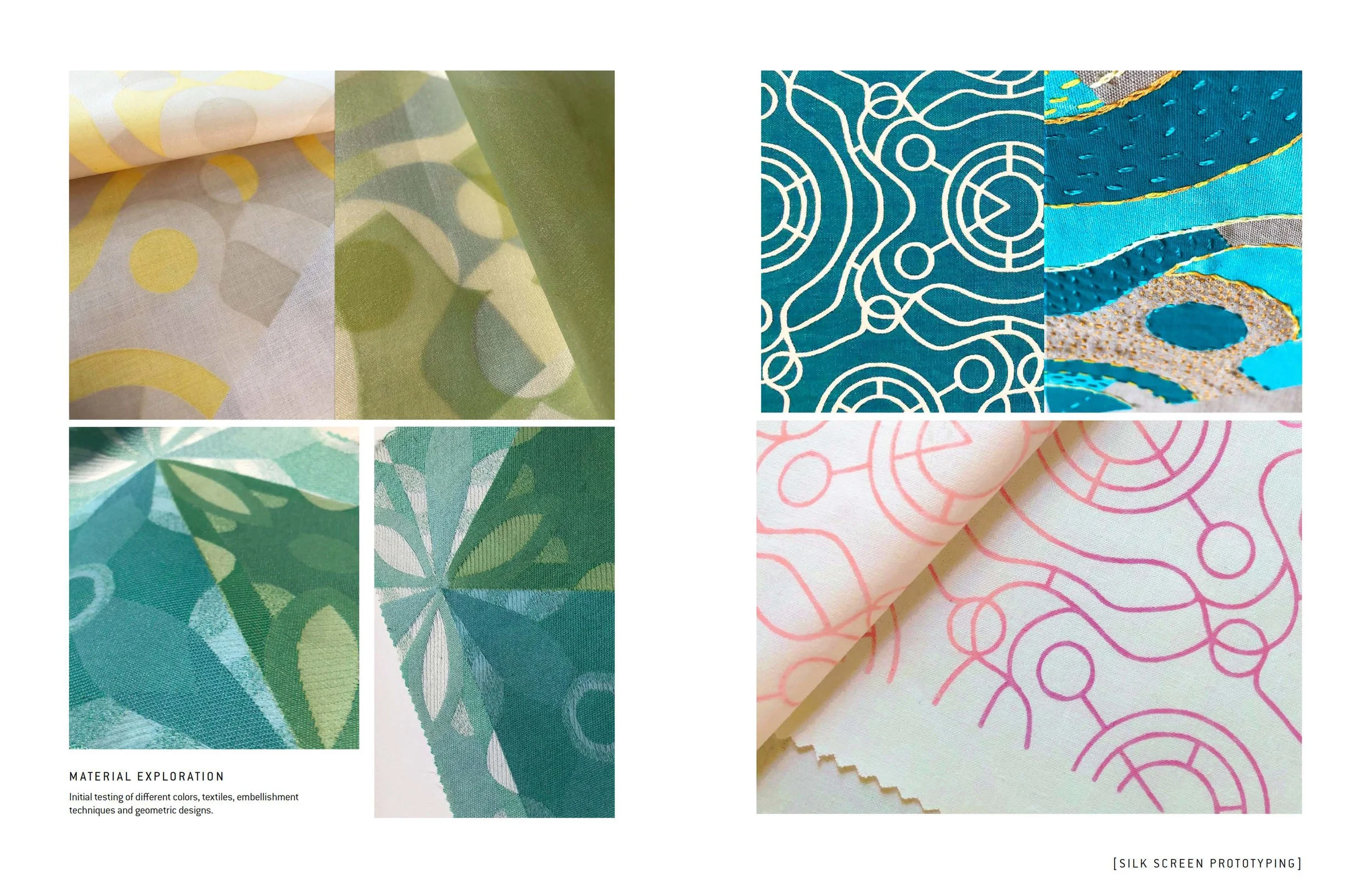
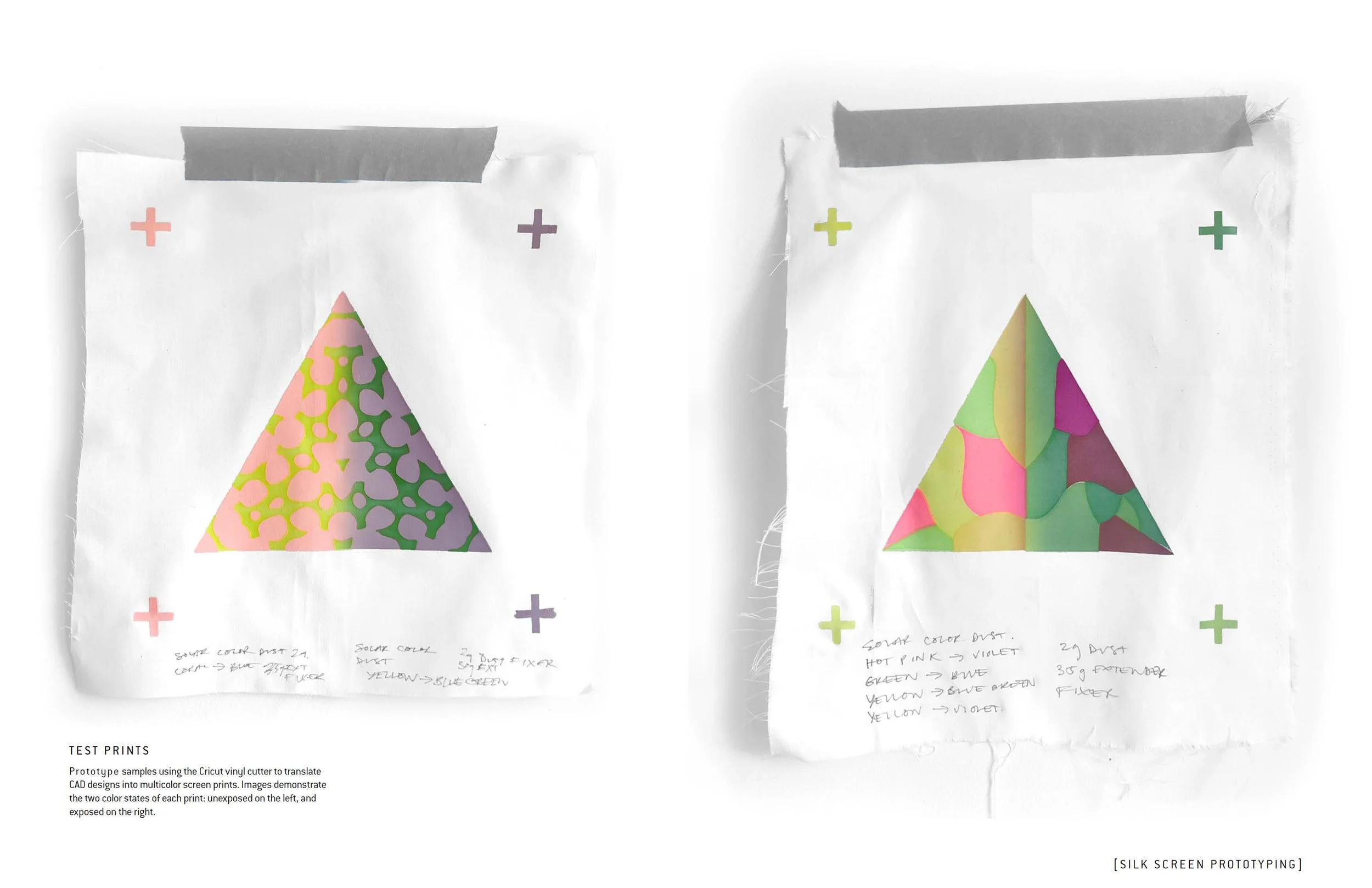
The silk screen prototyping process used affordable, desktop ready vinyl cutters to produce silk screen prototypes from digitally generated vector patterns. This allowed for rapid testing of material research on specific applications, establishing a feedback loop between digital design, fabrication and real world results. We determined that the use of three to four layers of photochromic ink provided the most visual depth for our prints, and preferred textural applications- such as dot matrix and line repeats- which also allowed the raw textile to play a role in the final design. Particularly satisfying was the element of surprise created when a color changed its intensity, value or hue dramatically, so that a dominant element of the pattern receded and a new element became the focus. This means that the pattern has the illusion of changing in both color and shape, when in reality only color is changing.

Research made possible by the Center for Craft's 2019 Materials-Based Research Grant