The coded textile Project
The Coded Textile Project used computation to explore materials and meaning in textile embellishment. In the context of the project, “coded” meant designing a system of signs, organized by rules, procedures and relationships, using either analog or digital tools. Machine thinking generated new possibilities for print, embroidery and woven design. The project also took the approach that textile embellishment is itself a “code”- storing information, abstracting meaning, formulating new symbols or communication systems. The relationship of embellishment to location was central to this investigation of “embellishment semiotics”. Our digital sketches and textile outputs explored how technology impacts the interaction of surface design and environment.
Researcher: Anette Millington
Research Assistant and Creative Coder: Anna Garbier
Blooms: Dynamic Print systems
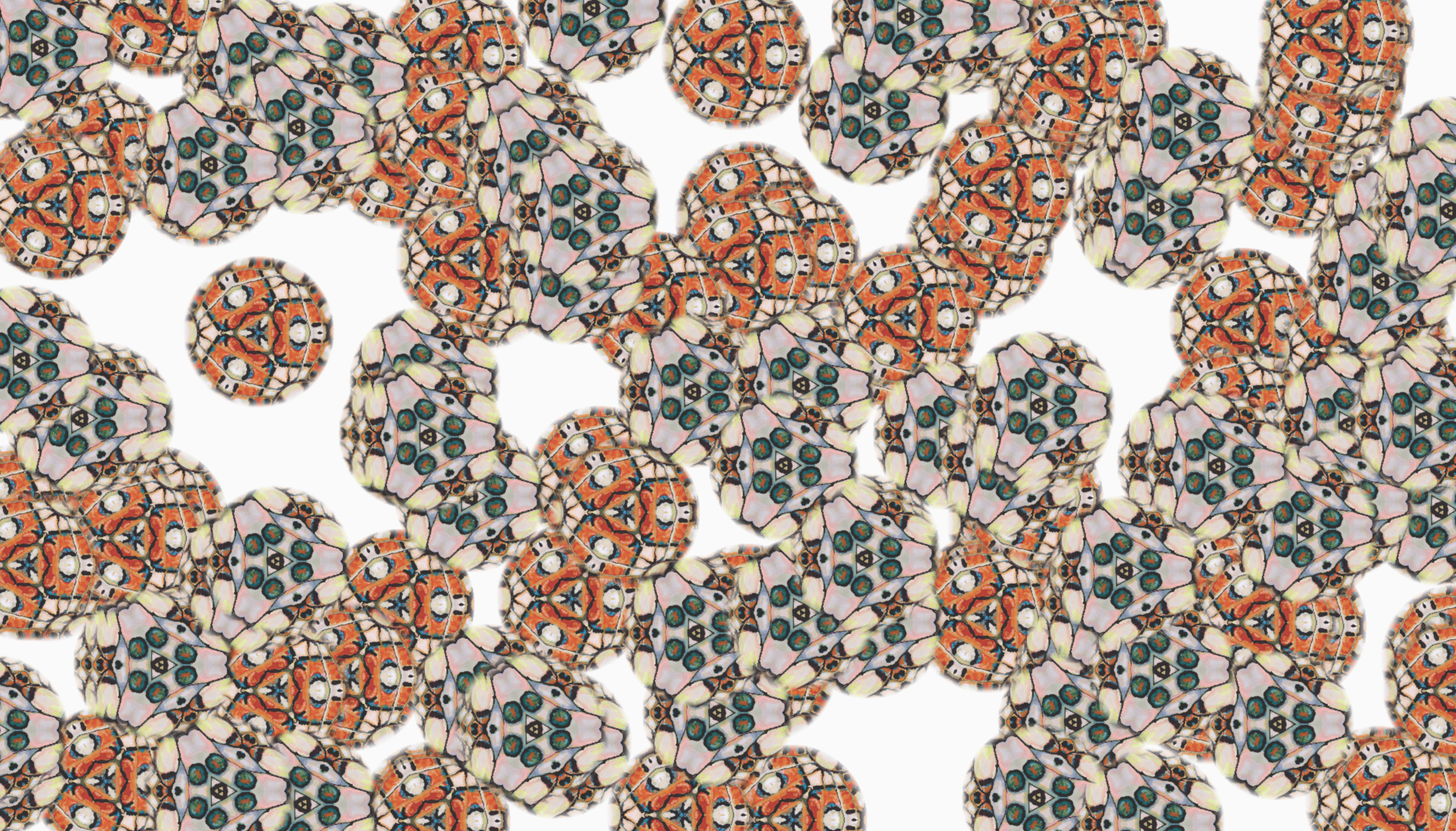
The bloom clusters and systems series mine the potential of computation to add new metaphor to print design- with dynamic elements that mimic not only the colors and shapes of nature (common in print history), but also new possibilities for print to take on natural actions- such as organic growth, cell division, and aggregation as well as interaction across the “pattern ecosystem”.
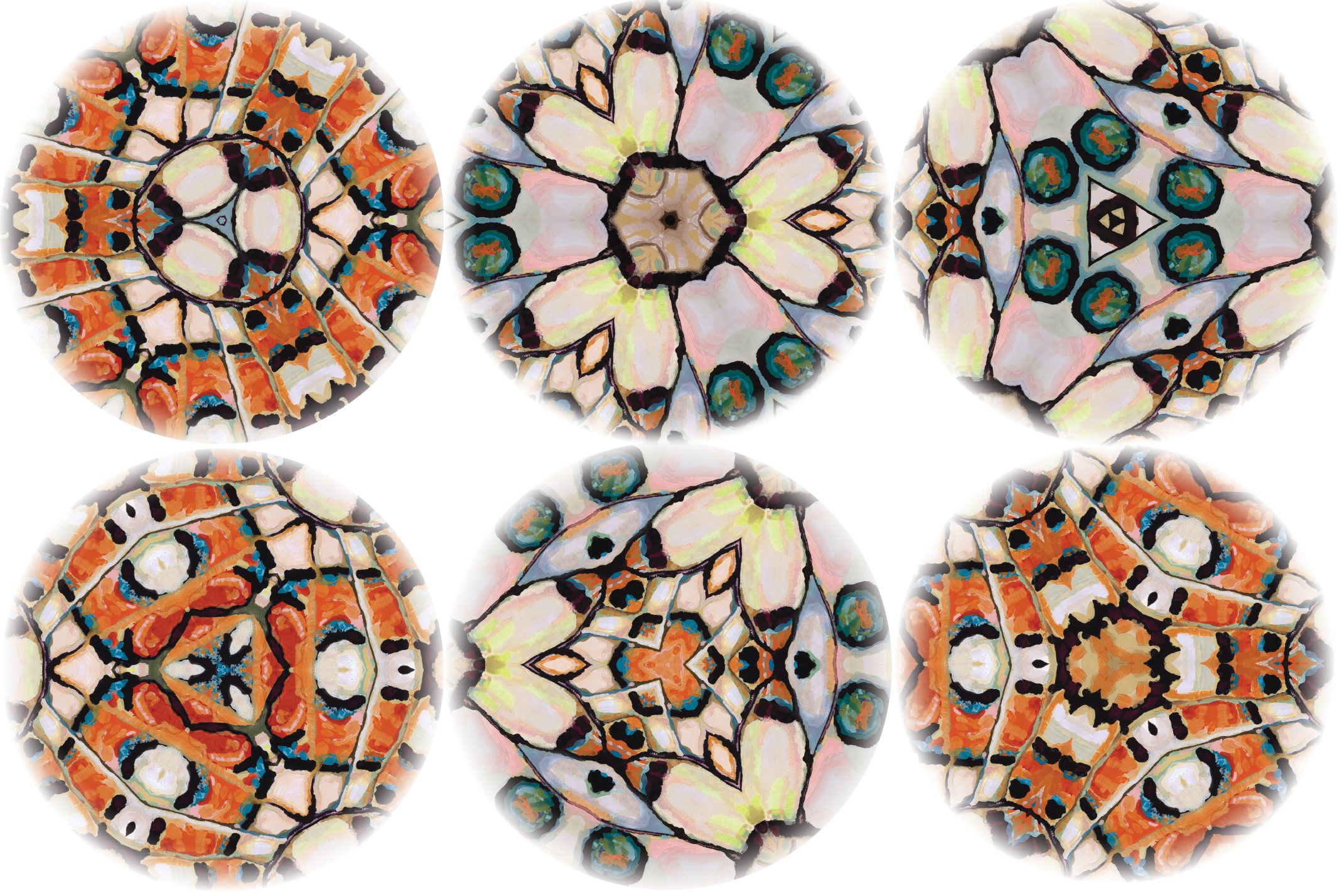
The series begins as a static pattern, and then takes circular sections of the pattern as cells or individuals to interact in dynamic patterns generated with computation. Methods include painting, digital print design, computational sketches.

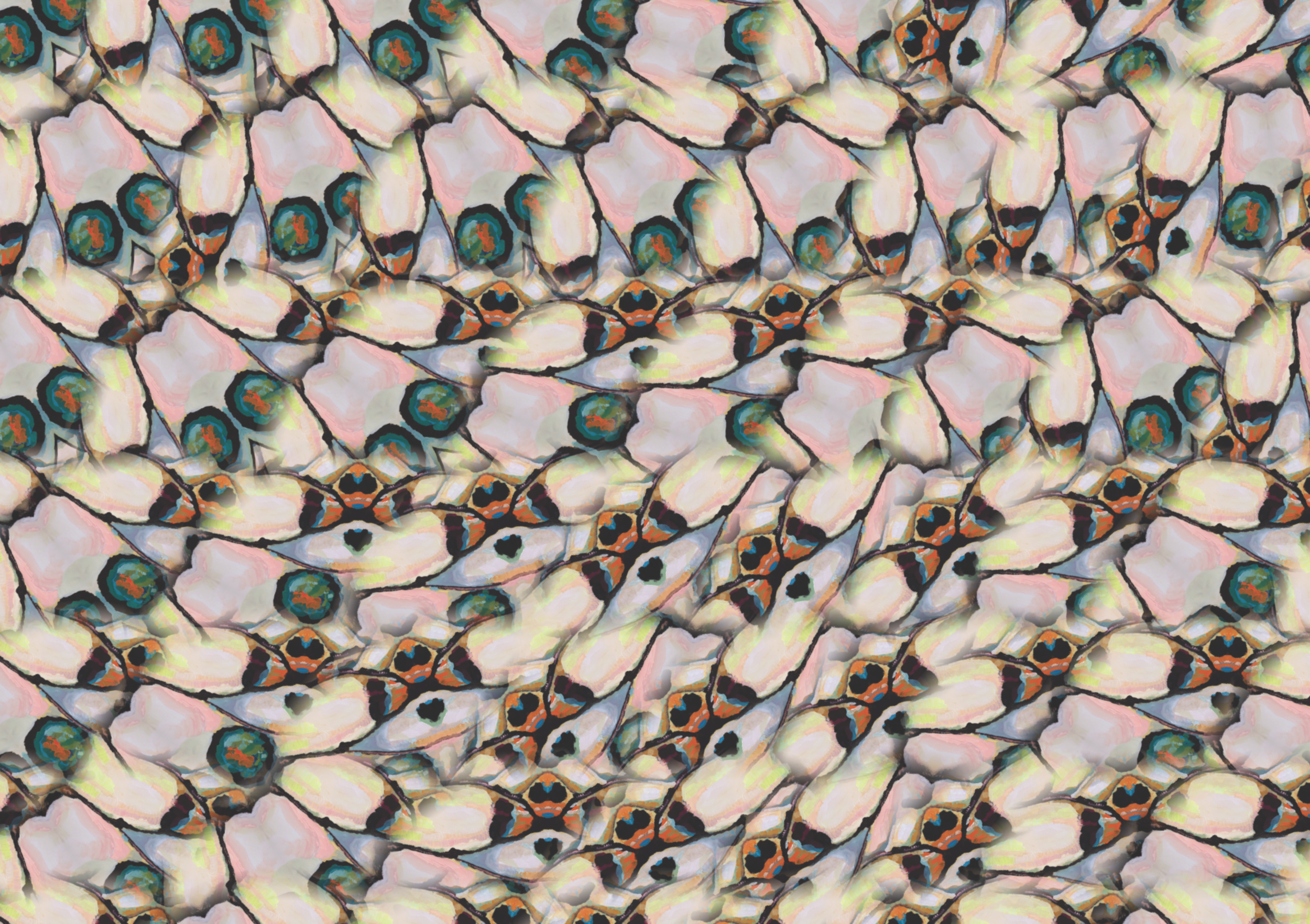
Original Print Design- Hand Painted Fragment, Digitally Repeated in Hexagonal Framework
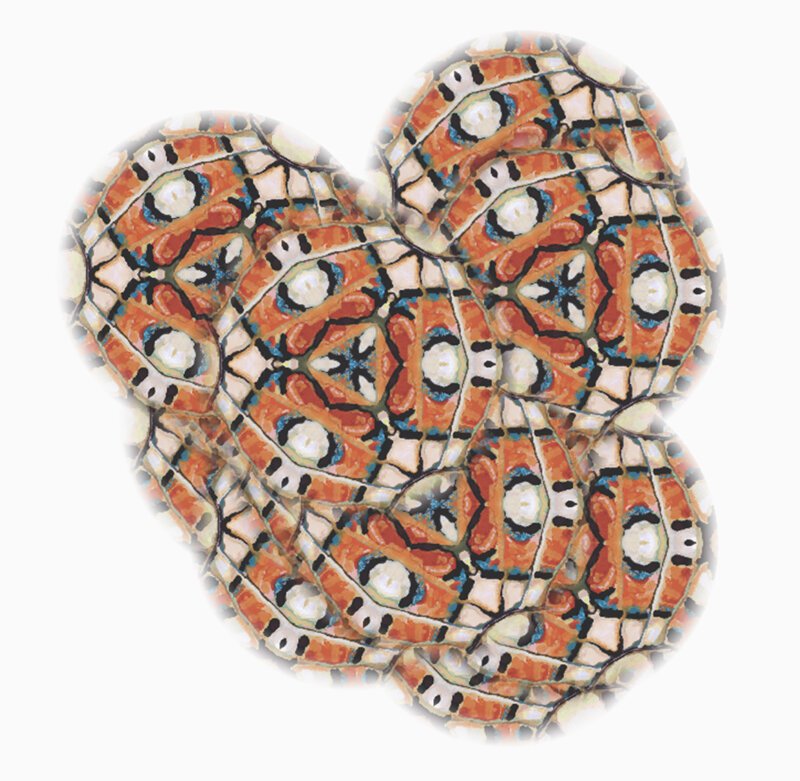
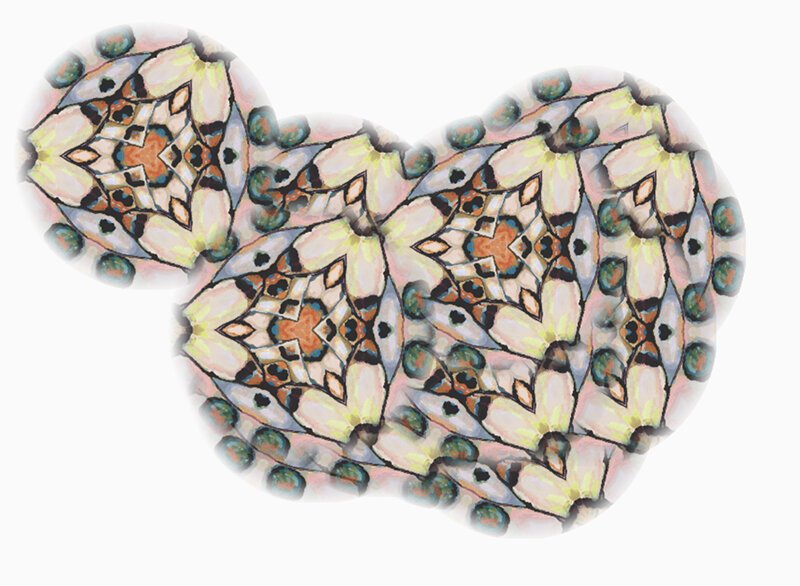
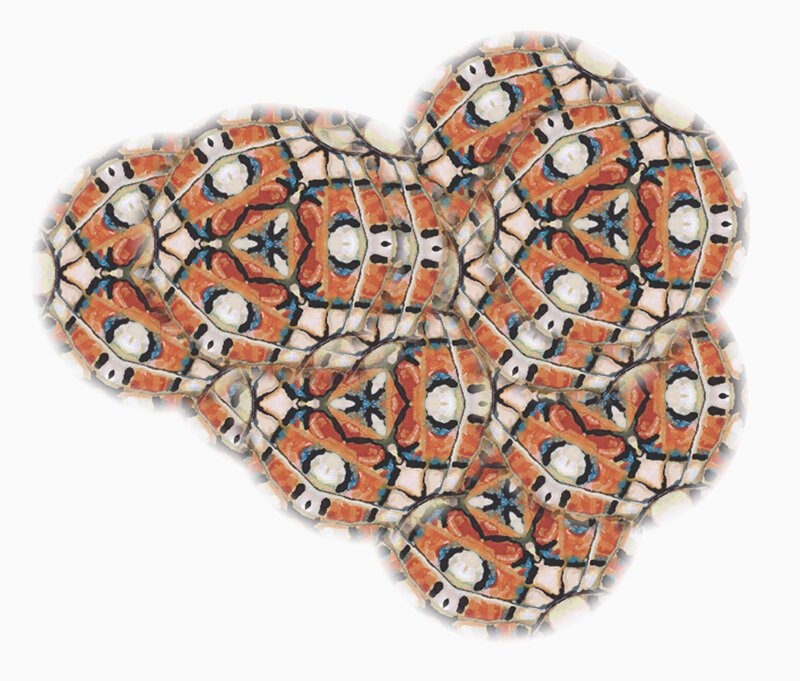
Bloom Clusters
The bloom clusters are generative artworks in which units multiply by defining the number, types and nodes at which radial patterns overlay. The resulting work references organic growth, cell division, and aggregation.
Bloom systems
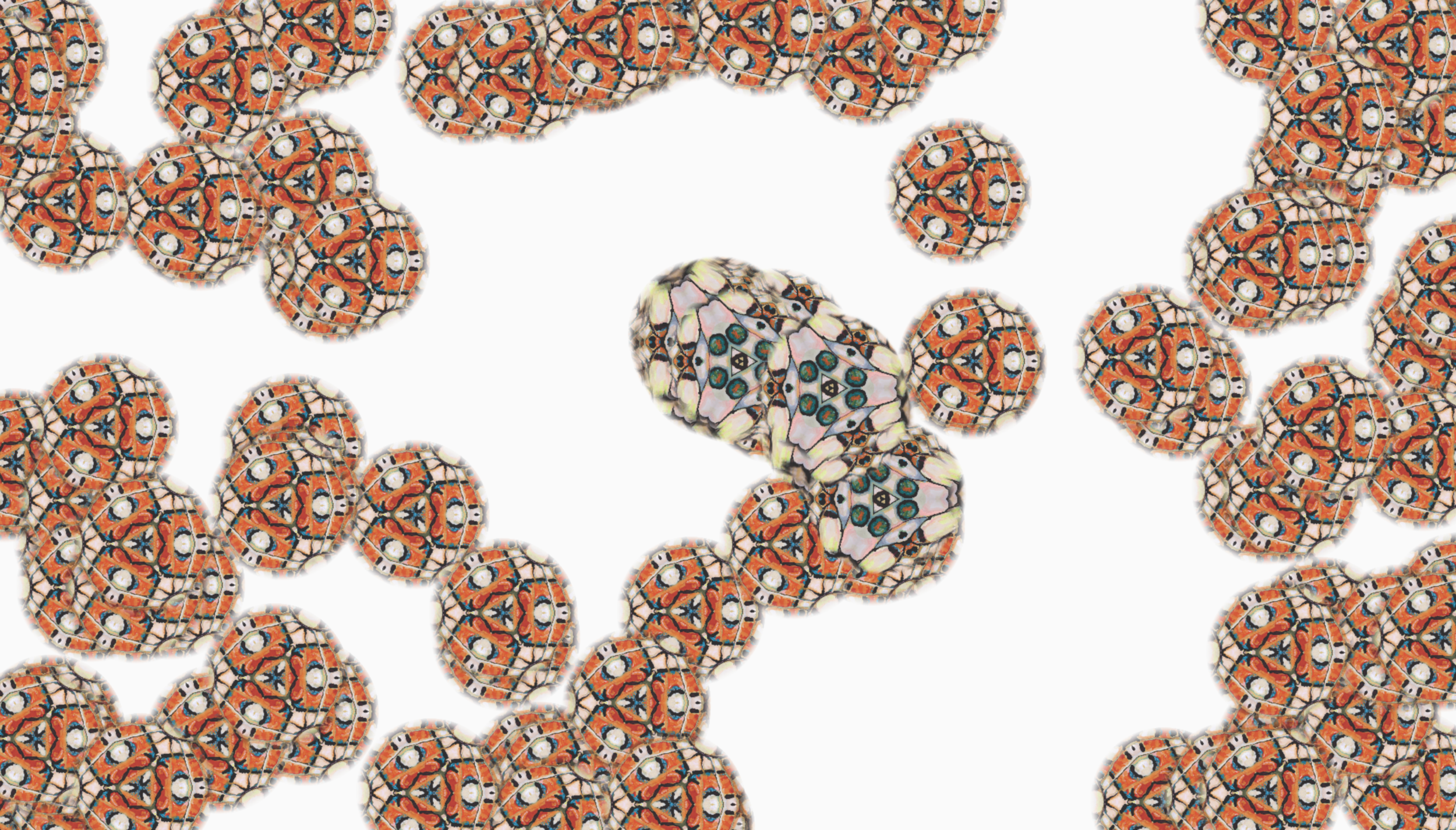
The bloom systems includes generative artworks in which pattern units interact to mirror natural or social systems- in which the behavior of one unit in relation to another causes a resulting new behavior. The bloom fields use a flow sequence so that the blooms move as if effected by an exterior force, such as wind. The bloom games are formations based on basic motivations to collect or disperse defined in the rules below:
Finding a neighbor/ Each orange bloom wants to be in contact with another orange bloom./ Each pink bloom wants to be in contact with another pink bloom.
Bloom clustering/ Blooms self-organize into smaller clusters of pink and orange blooms.
Attract and repel/ Pink blooms want to be as close as possible to orange blooms./ Orange blooms want to be as far away as possible from pink blooms.